The Renovation Story
of the 575 Project
Our interests are arts and music, health and healing, ecology and sustainability, food as medicine. We seek to model these community visions for future generations. The house we chose was built before the industrial revolution, and designed to take advantage of the elements. So we thought we would blend 21st century eco-conscious innovation with the era of conservation, where the houses were small, the land loomed large, and the same soap was used for the dishes, the laundry, and the conservator.
House (circa 1860)
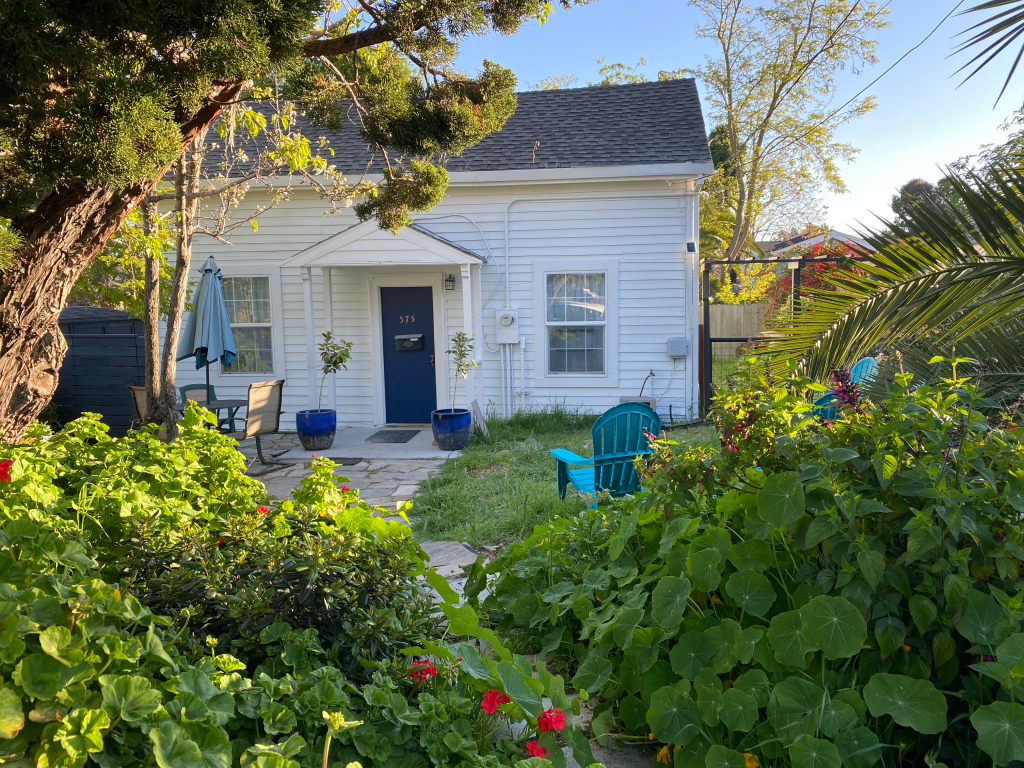
This saltbox-style residence is among the oldest buildings in the historic district. Its simple vernacular style represents the types of buildings that were constructed in the early period of the city’s development. Its character defining features include its roof line, symmetrical organization, central gable roofed porch, fenestration and clapboard cladding. The building is listed as a contributor to the Downtown Historic District.
Studio
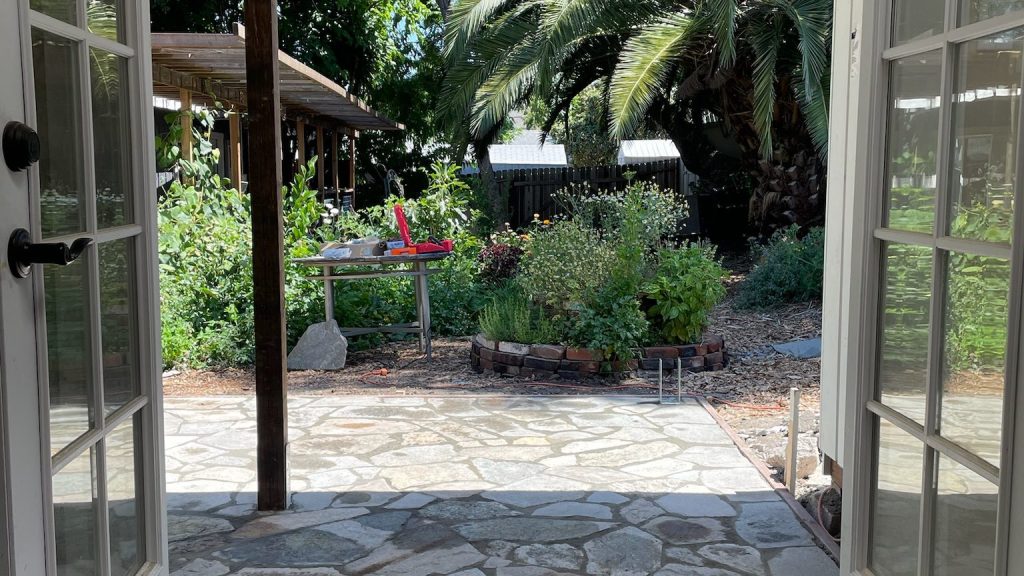
This is an early 20th century addition to the main house. “Linoleum rugs” from throughout the 20th century were excavated like layers of history to reveal a secret basement door, its handle salvaged from a ship. New handmade workmanship includes a disappearing library door and retractable tansu steps.
Casita
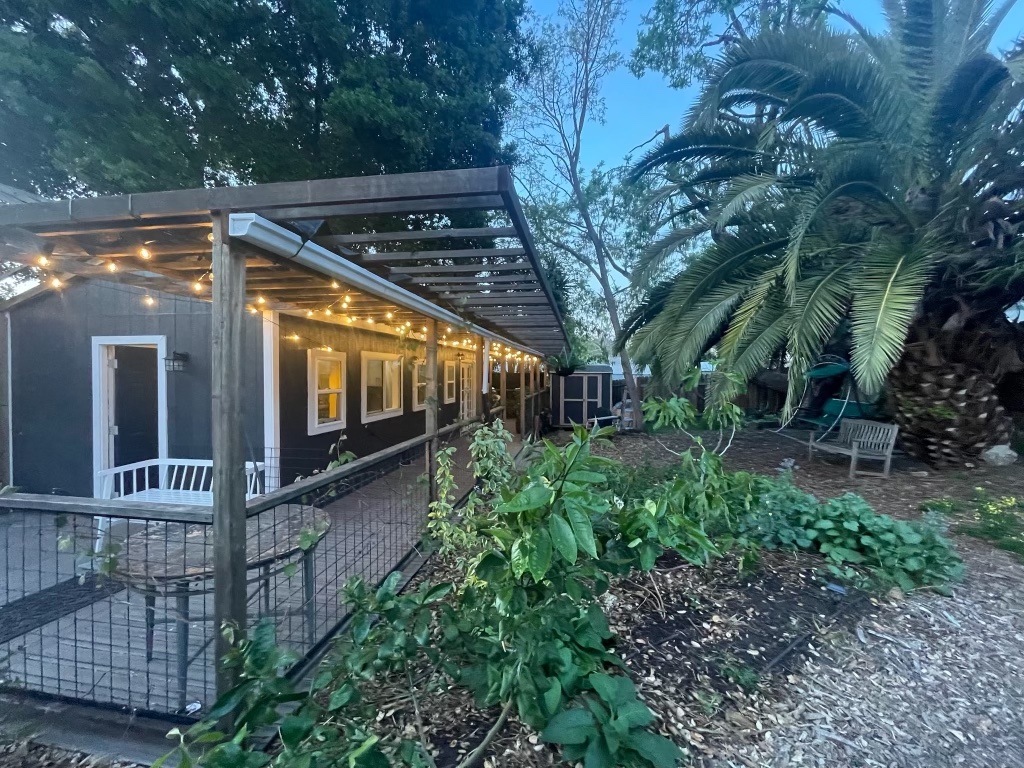
The casita was constructed in the mid-twentieth century atop the homes’ original stables as the original smithy of Willowroot Wands. Spiral Goddess designer Abby Willowroot was a fourth generation metalsmith best known for her contemporary Goddess jewelry in sterling and gold. Many of her pieces are in porcelain, wood, bronze, concrete and graphics, and all are characterized by strong spiritual, organic, and multi-cultural aspects. Today the creative enclave features a wraparound deck, symbolizing the man-made spaces sailing upon the waves of the land.
 Yggdrasil Garden